

I have, thus far, offered little kindness to modern politickery. So let me offer a tenderness that is due after seventy-eight chapters of essay on the Tao Te Ching: no one holds a grudge longer than the people in government.
We tend to think of unresolved conflict as something confined to the theater of war. The wars of the twenty-first century, after all, are widely understood to be the products of decisions made decades or even centuries earlier. Treaties signed after World War I produced conditions that all but guaranteed World War II, the Korean War, Vietnam, and the ongoing conflicts in Africa and the Middle East.
But the theaters of war are not limited to distant battlefields. They exist in the halls of Congress, in state legislatures, and in local government buildings.
In politics, memory is long. Politician A remembers that Politician B supported his opponent in the last election. Mr. B’s bills are now dead on arrival. So are the bills supported by anyone even loosely associated with him. The offense need not be ideological. Loyalty matters more than merit.
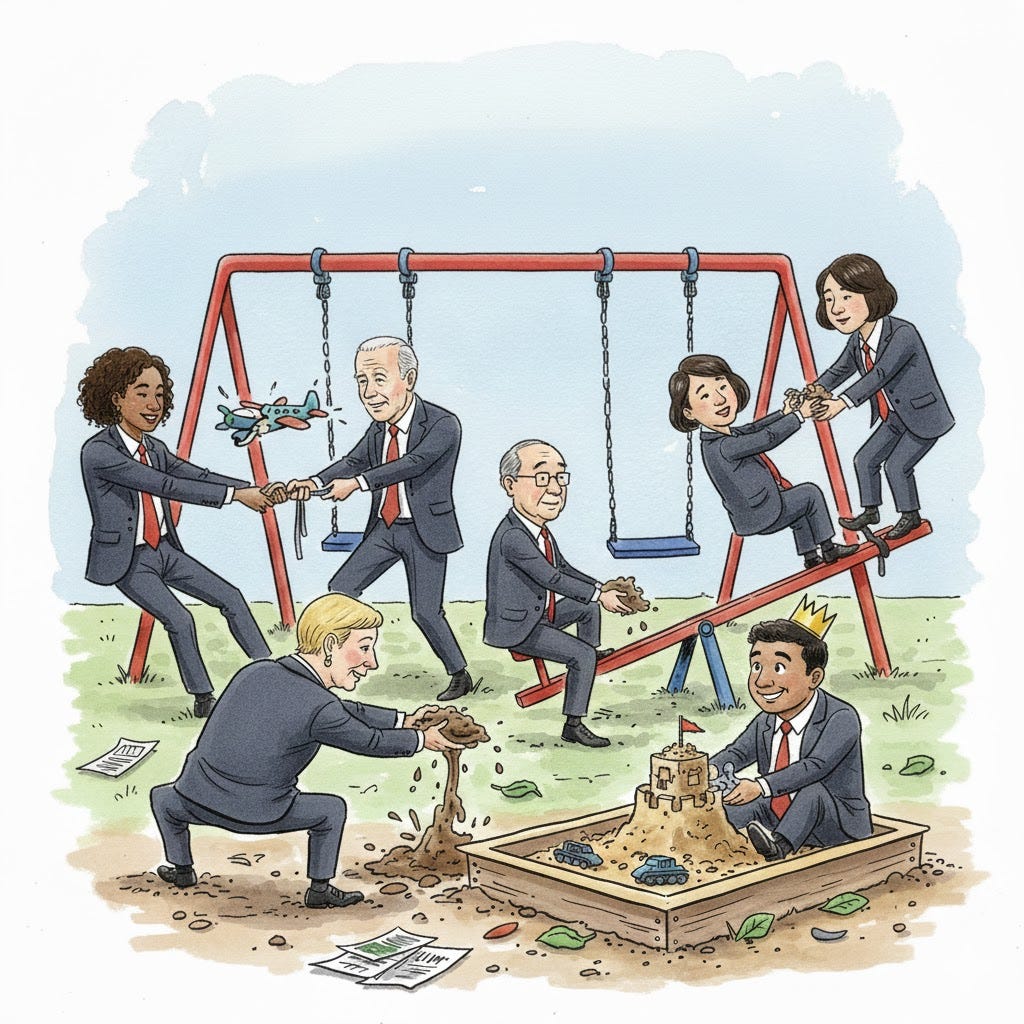
In this circus, people do not rise or fall based on wisdom, competence, or even persuasion. They rise and fall based on grievance. Who leads and who is sidelined —and which ideas are permitted to live or condemned to die — are often determined not by what serves the public, but whether the schoolyard-bully-who-became-political-ruler collects his pocket change.
Laws are written this way. Lives are governed this way.
When bitter enemies make peace,
Surely some bitterness remains.
How can this be solved?Therefore:
The sage honors his part of the settlement,
But does not exact his due from others.
The virtuous carry out the settlement,
But those without virtue pursue their claims.Heaven’s Way gives no favors.
It always remains with good people.Chapter 79, Tao Te Ching, translation by Stefan Stenudd.
Lao Tzu does not deny that conflict leaves residue. He denies that demanding repayment heals it. The virtuous does not press advantage. He does not seek recompense. He does not weaponize memory.
Politics, by contrast, is institutionalized grievance. It remembers every slight. It preserves every score. It confers power upon those most willing to nurse resentment and convert it into control.
If it is naïve to believe that those who wield power will ever abandon vendetta, then a harder question follows naturally: why would anyone entrust so much of our lives to people who govern like children settling scores on a playground?