
The war on possibility
Why peace has to be part of a policy framework

If we want public policy to reflect the qualities we hope to pass on to our kids and grandkids, peace and love are at the top of my list. I discussed love previously, and now I tackle peace.
Peace is the absence of war and the careful deliberation of when one does need to go to war, as will occur from time to time. But I view the definition more expansively, because there’s a war on human potential that is very much underway in statehouses, courthouses and city halls across the country.
Peace is a firm commitment never to use the law to elevate or diminish any person, group, class, sex, race, or so on. It is easy enough to wage a silent war on people simply by weaponizing the law: tax advantages for some and not others, restrictions on who may earn a living, rules that make owning property more expensive or impossible. It would be scandalous to pass a law that outright kills off everyone with red hair. But you could pass a law making it impossible for redheads to hold the jobs that feed their families — and achieve, over time, the same effect. Milder versions of this are everywhere — in zoning and tax codes, subsidies and policy preferences, that pick who gets to prosper and who doesn’t.
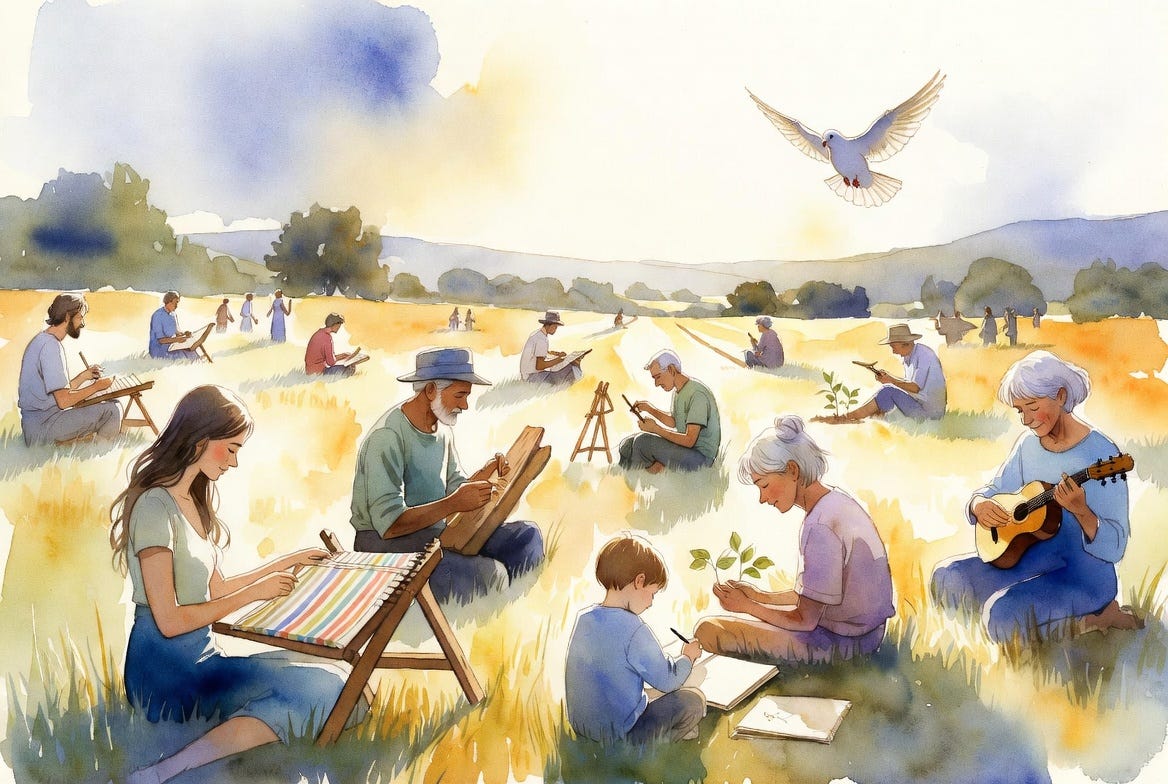
Peace is also the recognition that each of us is born with unique gifts and talents. Who am I to say where they come from? Depending on your beliefs, maybe God, Source, the Universe, Tao, or the random collision of atoms arranging themselves into the one-of-a-kind beings that are you and me. Whatever your answer, the invitation of a life is the same: discover those gifts and pursue them however you please, so long as you do so peacefully.
Notice how often government subordinates that pursuit. A school system that decides what a child will learn, and when, and how. A licensing board that tells a person he can’t pursue a dream or a passion without thousands of hours of classes. A permit office with the final say on what a person’s business or home looks like. No one calls any of this a war. But that’s what it is, especially if it is designed to stifle human behavior simply because it doesn’t conform to some preset version of what a person should be and what dreams they’re allowed to bring into existence.
So here’s the invitation: make peacefulness a regular part of how we talk about and consider public policy. Ask the question: Is this policy peaceful? If not, why not?
Peace is not just how a nation answers military conflict, but whether a policy — however well-intended — interferes with a person’s peaceful pursuit of their highest purpose.