

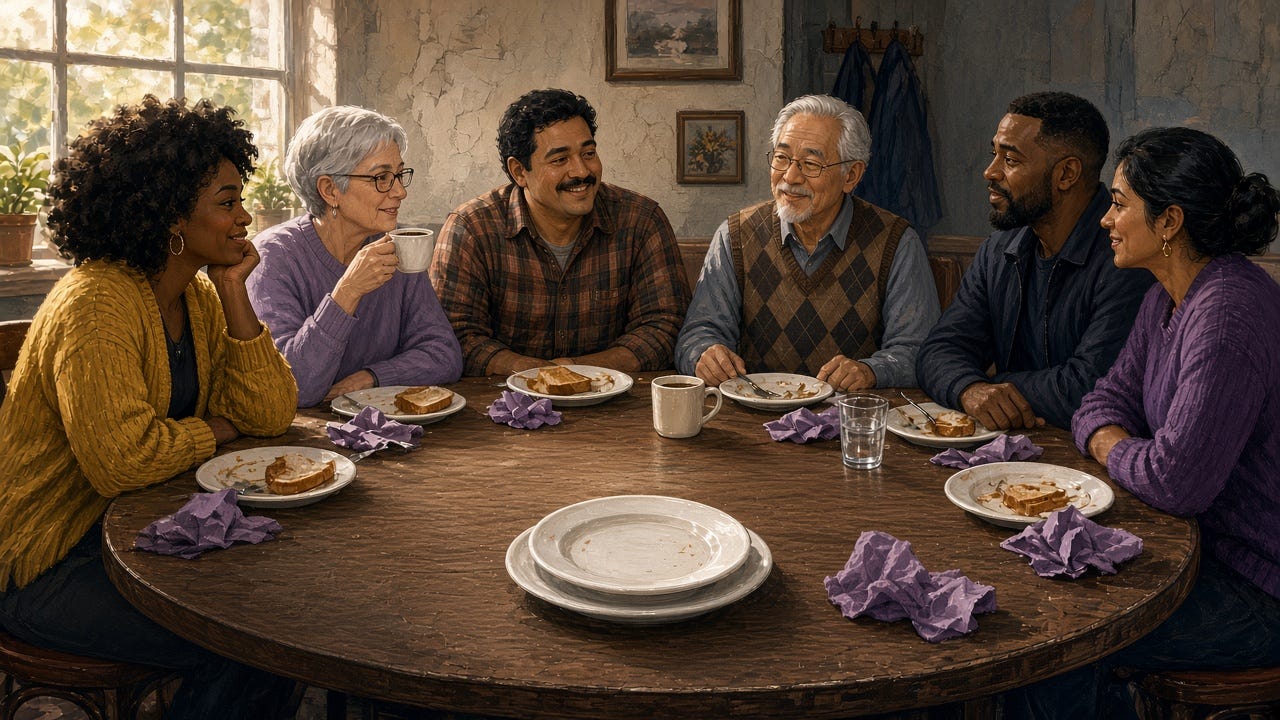
Imagine that you’ve just stepped inside a favorite local restaurant. In the corner, there’s Table 6. It’s a large, round table that accommodates a crowd of people who gather regularly at breakfast to discuss all the latest issues. You recognize some of them. They’re your neighbors, work colleagues, or people you see at the gym. Some you’ve never met, but they seem pleasant enough, and you have no reason to doubt their sincerity as they debate war or taxes or the price of diesel.
Lately, they’re on a health kick, and they’re going on about processed foods, prescription medications, and vices like drugs and alcohol. They’ve done a lot of reading and a lot of research. It seems as if they know whereof they speak.
Yet it is highly improbable that, left to your own devices, you’d be so enamored with their pontifications that you’d sign a legally binding document that said, “Henceforth, only Table 6 will get to decide what you put in your body.”
They’re not smarter than you. There’s nothing about you that they know better than you. And you certainly wouldn’t sign a paper giving them control over dangers known or unknown.
That is basically what House Joint Resolution 4 (HJR 4), a constitutional amendment on Idaho’s November ballot, is asking you to do. You’re being asked to sign a legally binding contract that says “only the Legislature” may legalize “marijuana, narcotics, or other psychoactive substances.”
Now, to be fair, the Legislature isn’t Table 6. You get some say on who sits there. But a vote every two years doesn’t make anyone an expert on your body. It is true that the Legislature already makes the rules on drugs. What you have today is a path around them if they go too far. Or not far enough.
You and your neighbors can gather signatures and decide the question yourselves. HJR 4 would seal that door shut, probably forever, but only in one direction. You could still petition to ban more. You just couldn’t petition to ban less.
In this proposal, “only the Legislature” might as well be “only the people at Table 6,” deciding the legality of an undefined thing they’re calling “psychoactive substances.” But what is that?
Cannabis is psychoactive. So is psilocybin. But so is caffeine. So is nicotine. Lawmakers say HJR 4 covers only substances that are already illegal, so your morning coffee is probably safe. For now.
But could a future Legislature decide to ban, say, energy drinks with high caffeine content? Or vape products? And if it did, could you and your neighbors still overrule it if you believed it went too far? Under HJR 4, no. Once something is banned, only the people who banned it could bring it back.
It’s easy to say that decisionmakers would never go after something as ordinary as caffeine or nicotine. Don’t be so sure. Efforts to pass vape restrictions and bans have been underway for years. And there are mounting questions about the safety of highly caffeinated energy drinks, particularly in the hands of kids. It doesn’t take much to imagine a successful effort to restrict or ban them.
The other problem with the legally binding contract you’re being asked to sign is that the people at the table tend to change.
At the diner, Justin, the executive coach, and Matt, the musician, show up for every gathering. But Mary, the semi-retired bus driver, comes only every so often. Brenda has been coming for years, but Maggie is fairly new. Freddy’s knowledge left when he died last year.
In the Legislature, there’s a regular parade of comers and goers. It’s part of how the place operates. How they collectively might interpret “psychoactive substances” in the future is a mystery.
And even though you’re the one signing off on this deal, it will apply to people not old enough to sign, people not yet born, and people who move to town in the years ahead. Can you say how they will interpret the wording, or how they will demand that it be enforced? Can you be sure that some neighbors on the other side of town, or the other side of the state, won’t decide “psychoactive substances” means Red Bull, coffee, or kava, and beg the table to ban them?
So now, let’s talk about how laws get made. I have my own reservations about citizen initiatives, and there is a logical reason to limit their use, particularly when it comes to taxes, budgets, and the formation of government agencies and programs.
But HJR 4 isn’t about the administration of government. It’s about the administration of you. If “only the Legislature” has the sole claim on what goes into your bloodstream, it says you don’t own you; the government does.
And it implies that even a hint of possibility that you retain ownership of yourself needs to be permanently erased. I have no idea how a future legislature, court, or voting public will greet that reality. And so it must be stated definitively, in my words here, that there was, in 2026, a group of us who objected vehemently to the notion that someone else — anyone else — has the right to decide what your neighbor drinks, smokes, or swallows.
You should never give that power to the people gathered for breakfast in the corner of a diner. Nor should you give it to the people gathered in a building in Boise. Honor your humanity, your agency, your sovereignty, by choosing to keep it.