

Rep. Kent Marmon, R-Caldwell, is telling Idahoans they should amend the state constitution so that no drug can ever be legalized without the Legislature’s approval, because doing so is consistent with the constitution’s mandate that lawmakers promote “temperance and morality.”
The constitution’s temperance clause does say, “The first concern of all good government is the virtue and sobriety of the people, and the purity of the home. The legislature should further all wise and well directed efforts for the promotion of temperance and morality.”
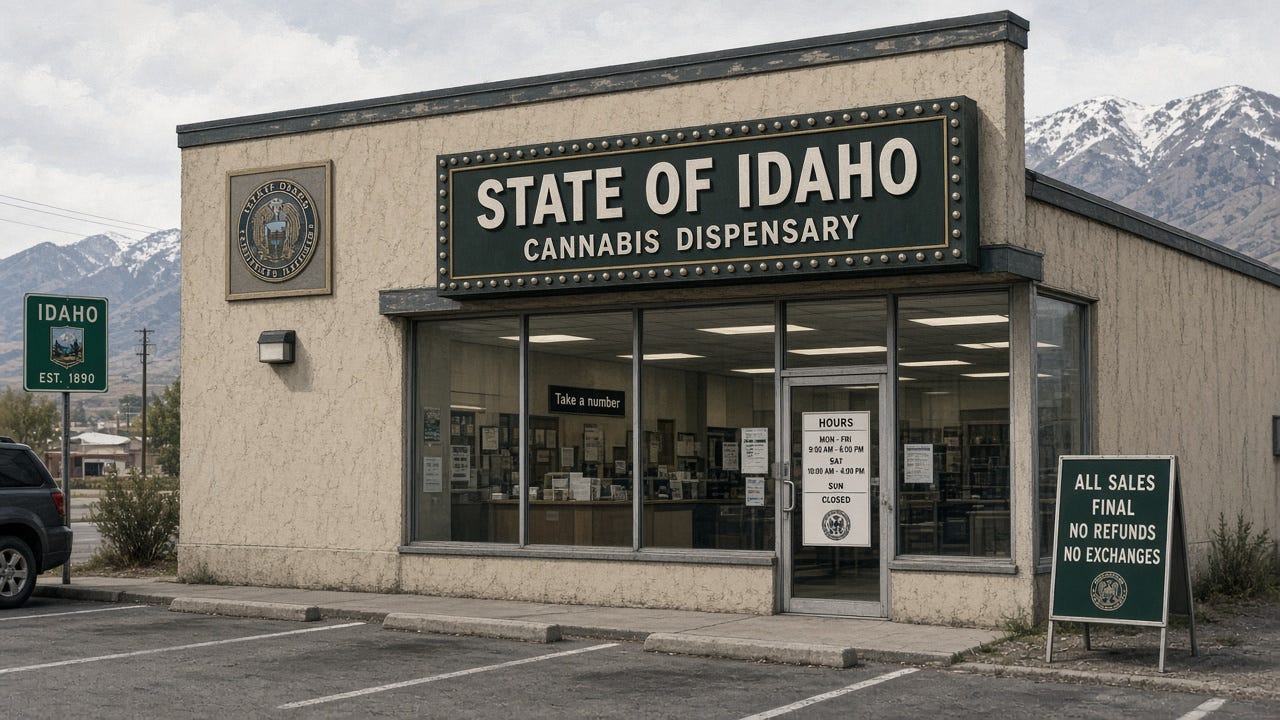
If you’re opposed to cannabis, you should recognize that the way Idaho lawmakers have written their proposed amendment makes it more likely than not that the state will someday run marijuana dispensaries.
In 1934, voters decided that “the legislature of the state of Idaho shall have full power and authority to permit, control and regulate or prohibit the manufacture, sale, keeping for sale, and transportation for sale, of intoxicating liquors for beverage purposes.” That replaced a 1916 amendment that had banned liquor “forever.” The ban lasted 18 years.
Idaho’s history with gambling is long and complicated, but in 1992, voters added this to the constitution: “Gambling is contrary to public policy and is strictly prohibited,” except for a state lottery, pari-mutuel betting, and charitable bingo and raffles. Casinos aren’t allowed in Idaho unless they’re run by a tribe, which is another long and complicated story.
In a social media post, Marmon says HJR 4, which is on the November ballot, is merely an extension of those existing alcohol and temperance provisions. HJR 4 would add a new subsection to the same section of the constitution that governs liquor, declaring that “only the legislature” may legalize “marijuana, narcotics, or other psychoactive substances.”
If we take lawmakers at their word that they’re simply building on the constitution’s existing provisions on temperance and morality, then the obvious has to be said: Alcohol and gambling aren’t prohibited in Idaho. They’re managed by the state. The state runs the lottery. Liquor is sold only in state-run stores or, in a few places, in private stores under contract with the state, and every bar in Idaho buys its spirits from the state.
And once government sells a vice, it comes to depend on the money. The state that is supposed to promote temperance collects revenue every time someone buys a bottle or a lottery ticket. A government in that position has every reason to keep selling and very little reason to discourage the product.
So it’s fair to ask whether HJR 4 keeps cannabis and other “psychoactive substances” out of Idaho, or whether it simply puts them under state control, to be sold someday through government-run stores the way liquor is.
I sincerely doubt that’s what the lawmakers who put HJR 4 on the ballot have in mind. But they won’t be the ones in charge in two years, or in twenty. If they wanted to ban cannabis permanently, they could have tried to write that. Instead, they wrote a power to legalize and gave it to themselves alone, in the same section that made the state Idaho’s only liquor wholesaler. They’ve left the door open to cannabis sales in Idaho, with state employees at the register.
A number of people have told me they support HJR 4 because they don’t like marijuana, whether it’s the smell or the harm they’ve heard it has caused in places like California, Oregon, and Washington. But HJR 4 doesn’t come close to a ban. It would merely create a hurdle, and a rather low one at that, since legislative majorities can change every two years. Taken together, HJR 4 points toward the state someday becoming Idaho’s No. 1 drug dealer, just as the state is already the No. 1 seller of booze and betting.
Temperance and virtue grow strongest when people choose them of their own accord. As with other government endeavors, the constitution’s insistence that the Legislature do this work is well-meaning and fundamentally flawed. State-endorsed drinking and gambling are the result. Eventually, state-supported drug use will follow.
Rather than expand the constitutional mandate, leave it to individuals, families, churches, and communities to do this work through peaceful engagement with themselves and one another. Government can’t do that for us, and it certainly can’t force it.
Whether the state bans a substance or sells it, the result is the same: A few people in Boise decide what the rest of us may put in our bodies, and voters lose any say in the matter. You own yourself. The constitution tries to dictate virtues that we would likely agree are important, but virtues have to be chosen to mean anything.